

Your Guards Patrol the Site. The AI Patrols the Phones.
Every missed scan chased. Every alarm followed up. Every answer on file.
A checkpoint goes unscanned at 02:40. Before your operator has looked up, Kalimera.ai has called the patrol, asked why, and written the reason into your monitoring platform. If nobody on site answers, the people in charge already know.




ILLUSTRATIVE · BASED ON A LIVE DEPLOYMENT
- Keep your phone numbers
- Plugs into your monitoring platform
- Your company’s voice
Scan the Checkpoint. Play the Guard Who Missed It.
Point your phone camera at the tag, or tap the number. Then answer like a guard on a cold night shift: short, distracted, switching language halfway. It asks the right question, gets a usable reason and logs it before you hang up.
- languages
- 65+
- to answer
- <3 s
- to a logged reason
- 55 s
The demo line runs a general Kalimera.ai assistant. Your deployment speaks with your company’s name, your sites and your reason codes.
Alarms Ring All Night. Your Control Room Has Two Pairs of Hands.
Most alerts turn out to be nothing, but every one still needs a phone call to prove it. Those calls land on a thin night team, one number at a time, while the next alert is already flashing.
intruder alarms passed to the police turn out to be false, and only 1 in 208 activations leads to an arrest
UK · National Security Inspectorate study · IFSEC Globalprivate security guards in Europe. Every missed scan means someone has to call one of them
45,000 companies · €40bn+ a year · CoESSof patrol follow-up calls fall between 22:00 and 06:00, exactly when the control room is thinnest
Kalimera.ai live deployment, security patrols, Sep–Oct 2026 · Case studyAn alert nobody called about is a risk nobody can see. And a question your client will ask tomorrow.
02:40. Twelve Scans Missed. How Many Have a Reason by Morning?
Illustrative. Timings based on a live security-patrol deployment: 55 seconds on average from hello to reason logged.
One Night Shift. Zero Calls Dialled by Hand.
Here is what your duty manager sees on their phone at 06:00: every follow-up made, every reason logged, and only the cases that needed a person.
- 22:14Reason on file
CP-04 missed at the port. The patrol phone answered: escorting a visitor. Logged in 48 seconds. - 23:50False alarm cleared
Zone 3 at Warehouse B. The second keyholder confirmed staff on site. Operator notified, no dispatch. - 01:30Every post confirmed
Hourly welfare calls to 9 lone guards. All answered, all logged. - 02:40Backup phone found the answer
Main phone off at Site 12. The patrol phone picked up: flooded gate road, reason 27. - 03:04Handed to a person
No answer at Post 14 on three phones. The post manager was briefed and took over. - 06:00Your night at a glance
Every call, every reason and every escalation in one summary, ready for the client report.
Illustrative night for one control room. Your own volumes go in the calculator below.
Six Calls Your Operators Make Every Night. The AI Makes Them End to End.
It reads the event from your platform, calls the right people in the right order, gets a usable answer and writes it back. Anything that needs judgement goes to an operator with the full story.
A checkpoint is missed. The AI finds out why before the next round.
Your guard-tour platform flags a missed QR or NFC scan. Kalimera.ai calls the on-site phones in order, asks the reason, matches it to your reason codes and writes it back. Nobody on site answers? It moves straight to the escalation list.
6,516 Calls Nobody in the Control Room Had to Make.
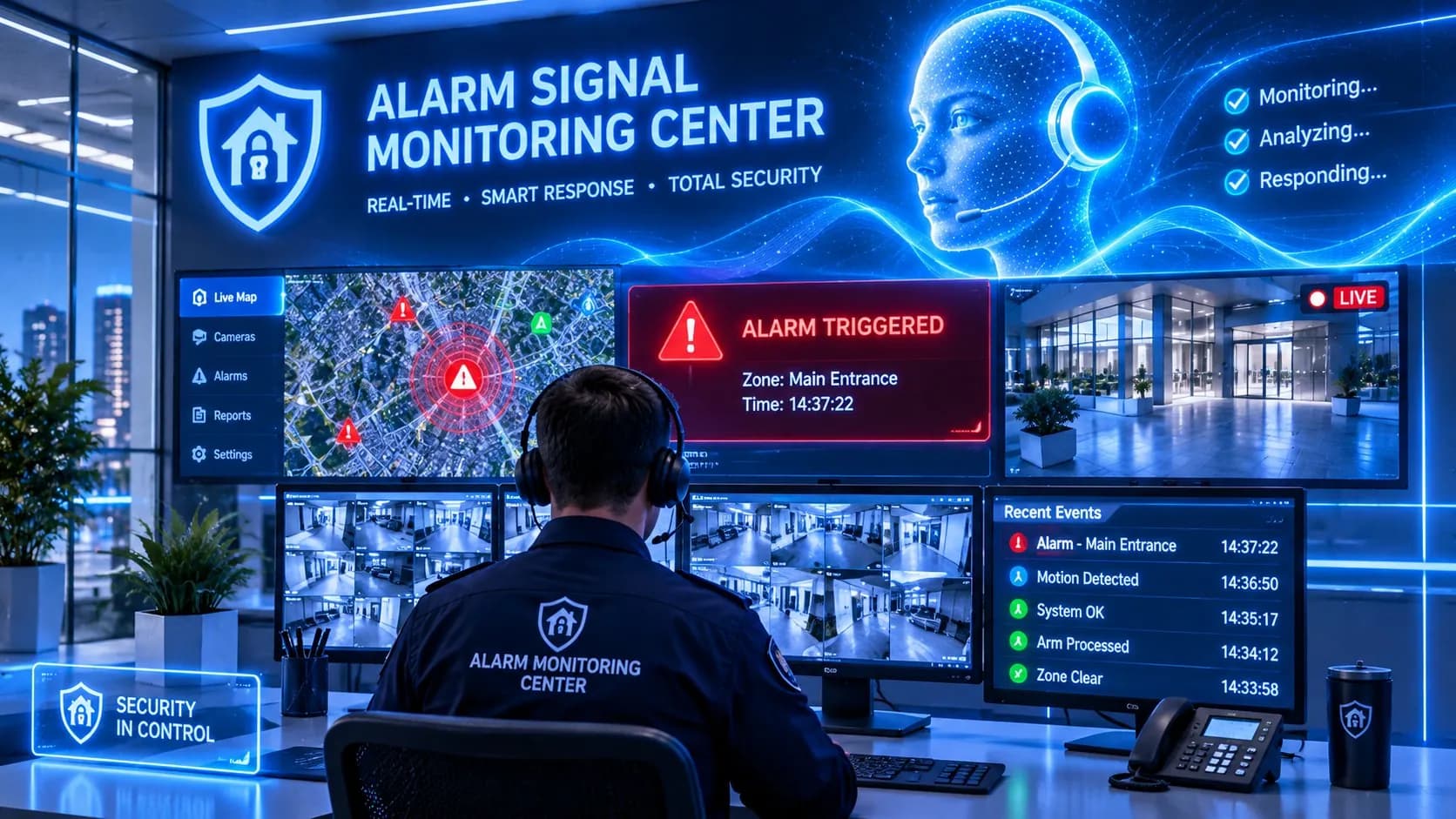
When a security services company’s monitoring platform flags a missed QR scan, Kalimera.ai calls the patrol’s on-site phones in turn, asks why the scan was missed and sends the reason straight back to the platform. If no one on site answers, it briefs the people in charge. Live since 3 June 2026.
 ~112 PATROL CALLS A DAY
- Corporate phone
- Patrol phone
- Post phone
55 seconds on average from hello to reason logged, from the standard list or in free text.
- Post manager
- Chief guard
- Project manager
172 of 207 escalation calls ended with someone briefed.
The reason per checkpoint shows the control room what is needed: a replacement guard or a new pass.
The agent makes the calls and logs the answers; the team handles only what needs a decision.
Every call and every missed scan documented, by checkpoint and patrol, ready to report.
Your guards keep walking. Your reports write themselves.
Run the same maths on my control roomLive production data. Figures cover 3 September – 30 October 2026, with around 112 calls a day. Results vary by site, patrol set-up and contact data.
What Is Every Unchased Alert Costing Your Night Shift?
The calculator opens with the case-study benchmark. Replace it with your own figures; everything updates as you move the sliders.
- calls made by the AI
- 3,360
- of them at night
- 1,378
- operator time freed
- 224 h
- full-time operators’ worth
- 1.4
Important notice. This calculator gives an indicative, non-binding estimate for illustration only. It is based solely on the figures you enter, excludes platform costs and is not an offer, forecast or guarantee. The case-study figures describe one customer’s deployment and are not a prediction for yours.
One AI Operator. Every Site, Every Line, Every Shift.
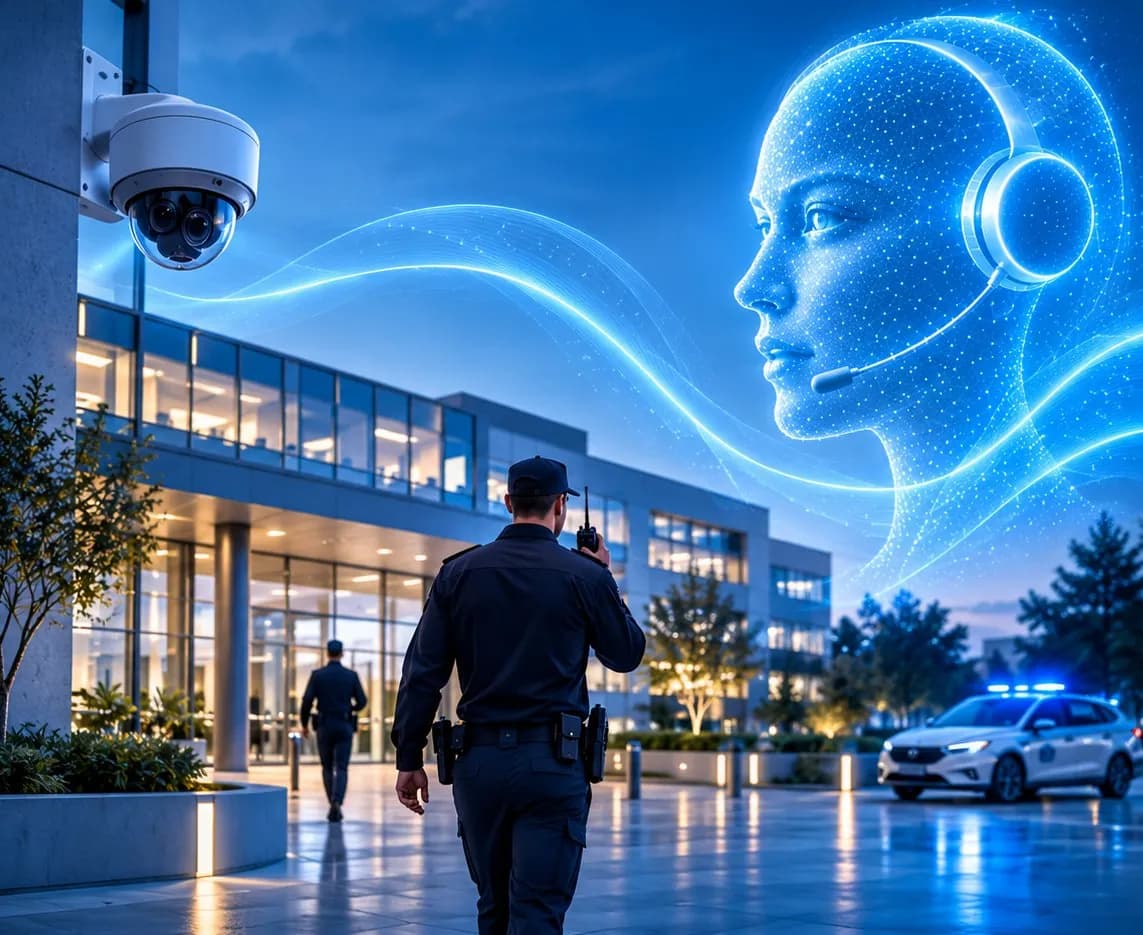
Guarding, alarm monitoring, mobile patrols or systems installation: Kalimera.ai works inside your platforms and your rules, inside a secure, certified perimeter, and your control room stays in charge.
- YOUR NUMBERSAny PBX or SIP trunk. Calls go out from your own lines and caller ID.
- MONITORING PLATFORMMissed scans and alarms trigger calls; reasons and outcomes go back via API.
- GUARD-TOUR APPCheckpoints, rounds and patrol assignments, so it knows who to call.
- CONTACT LISTSCorporate, patrol and post phones, keyholders and escalation chains per site.
- YOUR OPERATORSUrgent or unclear calls handed over live, with transcript and summary.
- SUPERVISORS & CLIENTSShift summaries and documented proof for every checkpoint and patrol.
- trigger
- missed_scan · CP-07 · 02:40
- reached
- patrol phone · 2 of 3
- language
- Greek
- reason
- 27 · access problem – weather
- duration
- 0:55
- wrote to
- monitoring platform ✓
- Automatic AI disclosure on every call
- Isolated single-tenant environment, role-based access
- Full LLM traceability: why it logged, escalated or handed over
- Senses urgency or stress and hands over to an operator
Start With One Night Shift. Live in Weeks, Not Quarters.
No change to your phone system. Most security companies start with missed-scan follow-up on one region, then add alarm calls, check-ins and the customer line.
- CP01STEP 01
Focus the use case
Pick the calls to automate first: missed scans, alarm follow-ups or the customer line.
✓ Validation gate - CP02STEP 02
Connect your systems
Monitoring platform, guard-tour app, PBX and contact lists over API.
✓ Approval gate - CP03STEP 03
Build the dialogue
Call order, reason codes, escalation rules and your company’s voice.
✓ Readiness gate - CP04STEP 04
Test rigorously
Hundreds of simulated guards, keyholders and customers, then your own UAT.
✓ Go-live gate - CP05STEP 05
Go live and scale
Start with one shift or region, then widen site by site and use case by use case.
✓ Ongoing tuning
What Security Companies Ask About Voice AI
From control-room managers, operations directors and alarm-monitoring teams.
Does it replace our control-room operators?
No. It takes over the routine follow-up calls, the dialling, retrying and note-taking, so your operators spend their time on the alerts that need a human decision.
What happens if nobody answers?
It works through up to six numbers in two levels: first the on-site phones to find out what happened, then the escalation list to make sure someone in charge knows. Every attempt and outcome is logged.
Can it connect to our monitoring or guard-tour platform?
Yes. Events such as a missed scan or an alarm trigger the call through the API, and the result goes back the same way, coded to your own reason list. In our live security deployment there is no manual entry at all.
Is it suitable for real emergencies?
It follows your protocols. Anything urgent, unclear or emotional is handed to an operator immediately with the full context. It supports your control room; it does not replace emergency dispatch.
Which languages does it speak?
More than 65 languages and accents, and it can switch mid-call, so guards, keyholders and customers answer in the language they are most comfortable with.
Do callers know they are speaking with AI?
Yes. AI disclosure is automatic on every call, in line with the EU AI Act.
How is our site and customer data protected?
Kalimera.ai runs in an isolated single-tenant environment, is certified to ISO 27001 and ISO 42001, and is compliant with GDPR and the EU AI Act. Access is role-based and every decision is traceable.
How long does it take to go live?
A focused pilot, for example missed-scan follow-up on one region, typically goes live within weeks. We agree a dated plan at kick-off, then expand use case by use case.
How is it priced?
Enterprise deployments are priced per second of call time; smaller companies can choose a fixed monthly fee. We size it on your real volumes.
Meet Your New Night-Shift Operator.
See Kalimera.ai call your own guards, log your own reason codes and brief your own managers, before your next night shift.